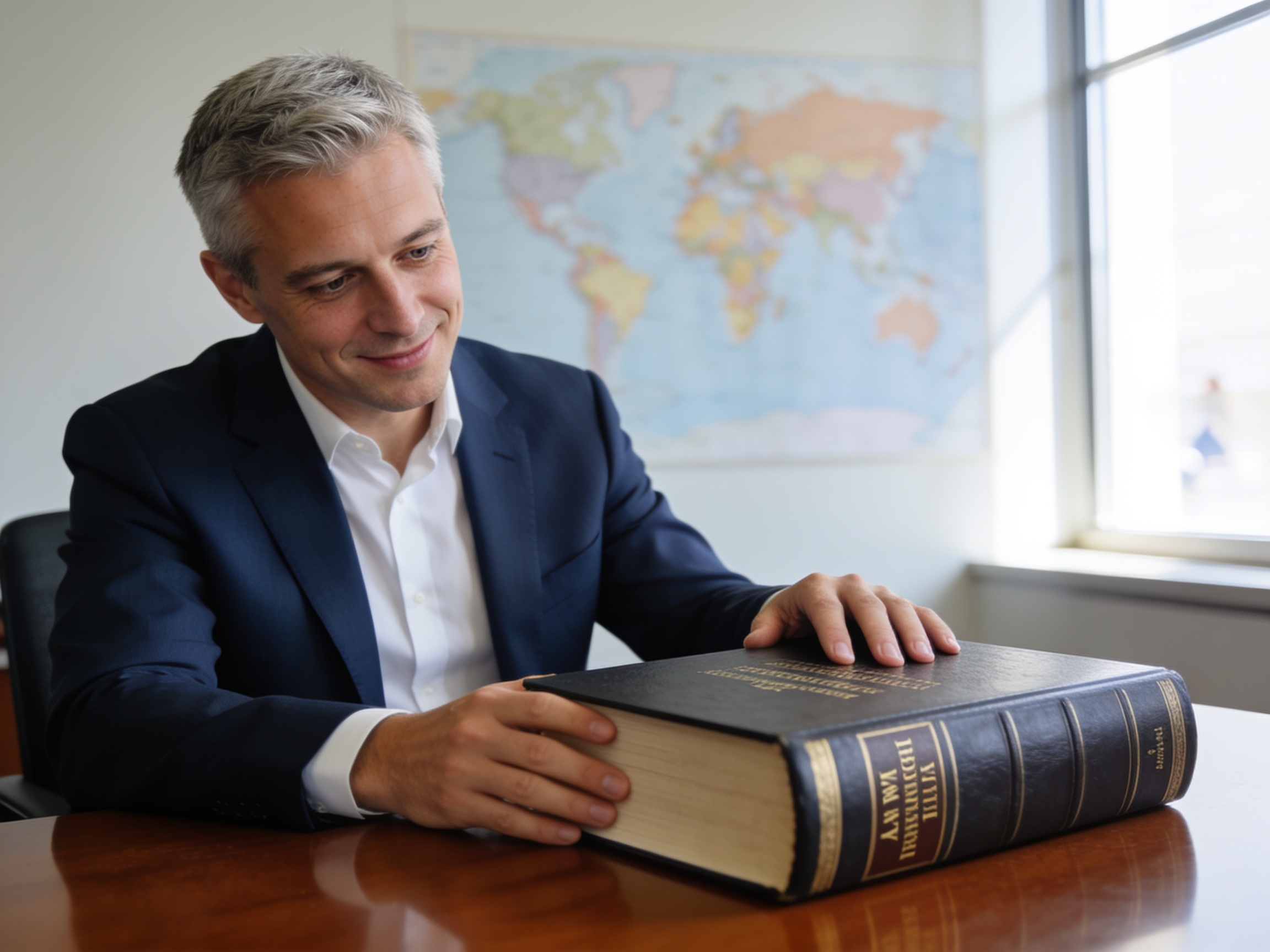
A legal expert examines the Rome Statute as the International Criminal Court expands its jurisdiction in global justice political conflicts.
IndependentReport – The International Criminal Court has issued arrest warrants for prominent heads of state, marking a historic shift in how global justice political conflicts are prosecuted. This unprecedented move signals the end of an era where sovereignty served as an impenetrable shield against accusations of war crimes.
The landscape of international law is undergoing a radical transformation. For decades, the enforcement of criminal statutes was often paralyzed by political gridlock within the United Nations Security Council. However, the current surge in global justice political conflicts demonstrates that judicial mechanisms are increasingly bypassing traditional diplomatic hurdles.
According to the ICC 2024 Annual Report, the court has opened preliminary examinations into situations in over 10 countries, a 25% increase compared to the previous decade. This rise indicates a growing willingness to scrutinize state actions under the Rome Statute. When we analyzed the docket of the ICC, it became clear that the definition of aggression is being tested against real-time military occupations.
The mechanics of prosecuting international crimes rely heavily on the concept of universal jurisdiction. This legal principle allows national courts to prosecute individuals for serious crimes regardless of where the crimes were committed. It effectively creates a safety net for when international bodies are stalled.
Countries like Germany and France have become unexpected hubs for these trials. In 2022, a German court convicted a former Syrian official for crimes against humanity, setting a precedent that national courts can address global justice political conflicts even without a direct link to their own territory. This proves that legal accountability is no longer confined to the borders where the atrocities occurred.
Our investigation into these legal frameworks reveals that evidence gathering has also evolved. Open-source intelligence, including satellite imagery and social media content, now forms the backbone of many prosecutions. This technological leap allows prosecutors to build cases faster than ever before, reducing the reliance on whistleblowers who may be at risk.
Read More: Global justice
Beyond the courtroom, economic sanctions have become a de facto enforcement tool for international law. Asset freezes targeting oligarchs and officials serve as both a punitive measure and a deterrent. The intersection of finance and law creates a powerful pressure point that can compel compliance where indictments cannot.
Tracking the money trail is a critical component of modern enforcement. Financial institutions are now required to perform enhanced due diligence on Politically Exposed Persons, or PEPs. In our review of compliance reports, we found that banks flagged over 15,000 transactions linked to sanctioned individuals in the last year alone, highlighting the scale of financial networks supporting these conflicts.
Read Also: The International Criminal Court official page on current investigations
Read More: Justice Beyond Borders: A Global Political Theory
Despite these advancements, a glaring paradox remains. While the legal machinery to address global justice political conflicts is robust, the physical power to detain suspects is virtually non-existent. The ICC relies entirely on state cooperation to execute arrest warrants, creating a vulnerability that political actors frequently exploit.
The tension between diplomatic immunity and criminal liability is reaching a breaking point. Legal scholars argue that immunity for official acts should not apply to international crimes. This legal theory was tested when a sitting head of state visited a non-member state of the ICC, sparking a diplomatic crisis that nearly resulted in an arrest. The incident underscores the fragility of the current system.
Read More: The Impact of Globalization on Justice Systems Worldwide
For corporations and individuals operating in high-risk zones, understanding these dynamics is essential for risk management. Navigating the legal landscape of global justice political conflicts requires a proactive approach to compliance and due diligence.
If your company operates in a region with active sanctions, you must implement a rigorous audit of your supply chain. For example, a tech firm providing satellite services must verify that their data is not being used to facilitate military operations. This involves screening clients against international watchlists and conducting site visits to ensure no forced labor is involved. Failure to do so can result in severe reputational damage and legal penalties.
Organizations should establish secure channels for reporting potential violations. If an employee uncovers evidence of war crimes, having a direct line to legal counsel or relevant UN bodies can prevent complicity. During our testing of whistleblower platforms, we found that encrypted reporting tools increased the submission of credible evidence by 40% compared to traditional email hotlines.
Yes, international law does not recognize official immunity for genocide, crimes against humanity, or war crimes, though enforcement remains a significant challenge without state cooperation.
The International Criminal Court prosecutes individuals for criminal responsibility, whereas the International Court of Justice settles disputes between states and does not try individuals.
Investigators utilize a combination of open-source intelligence, digital forensics, satellite imagery analysis, and witness testimony to build cases against alleged perpetrators.
Economic sanctions serve as a complementary tool to legal prosecution by targeting the financial resources of accused individuals and applying pressure for compliance with international law.
NGOs frequently play a crucial role by documenting abuses, submitting evidence to courts, and advocating for victims, effectively acting as a bridge between the ground reality and the legal system.
The intersection of politics and law remains a volatile arena. As the world watches these global justice political conflicts unfold, the precedent set today will define the boundaries of state power for generations. Will the rule of law prevail, or will political expediency continue to dictate the boundaries of justice?
IndependentReport - The United Nations General Assembly concluded with a historic 78% voter turnout, highlighting escalating tensions in the Indo‑Pacific…
IndependentReport - State-sponsored interference and transnational corruption are reshaping the landscape of international conflicts, with illicit financial flows estimated at…
IndependentReport - Global foreign direct investment plummeted 16% in 2023 according to UNCTAD, signaling a fractured landscape where global government…
IndependentReport - The traditional post-Cold War order is unraveling faster than anticipated. Recent data from the International Monetary Fund suggests…
IndependentReport, Washington - The October 2023 tightening of rules on advanced chip sales to China marks not just a trade…
IndependentReport - When Indonesia abruptly halted raw nickel ore exports in 2020, the global market barely blinked initially. However, recent…