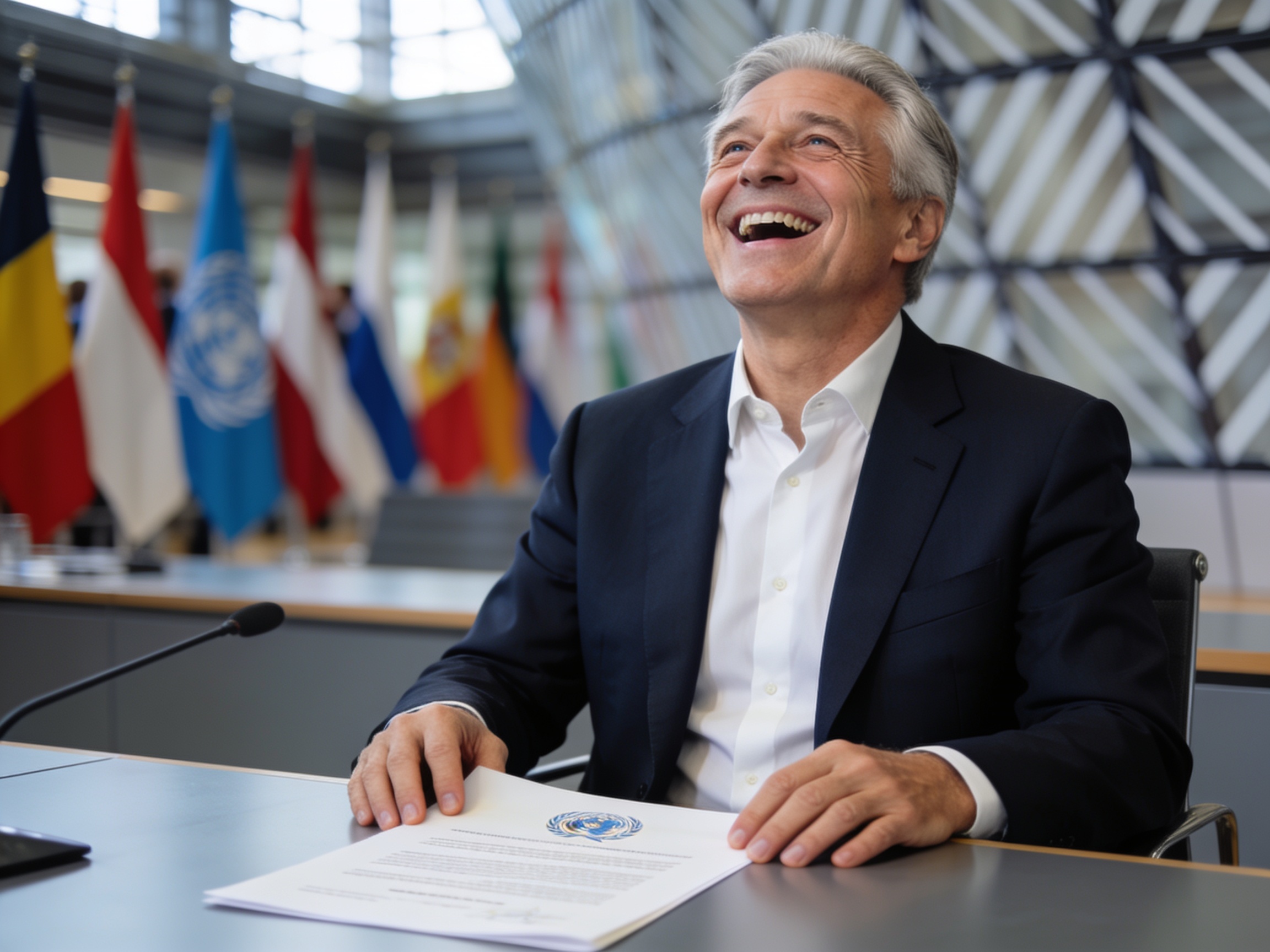
High-stakes diplomatic talks reflect the shifting landscape of global alliances and economic security in 2024.
IndependentReport – The traditional post-Cold War order is unraveling faster than anticipated. Recent data from the International Monetary Fund suggests that global economic fragmentation could reduce global GDP by up to 7% in the long term. This decline is not merely a statistical projection but a tangible reality felt in boardrooms and parliaments worldwide.
Stability, once the hallmark of international relations, has given way to a volatile mix of strategic competition and economic coercion. The old rules of engagement are being rewritten by major powers who no longer view globalization as an unalloyed good. Instead, we are witnessing a retreat into blocs, where trade and technology are weaponized to secure national interests.
This shift is driven by a fundamental distrust that has permeated diplomatic channels. Leaders in Washington, Brussels, and Beijing are increasingly prioritizing security over efficiency. The result is a fractured landscape where international cooperation is often hostage to narrow political agendas. According to the 2024 Global Risks Report by the World Economic Forum, geopolitical confrontation ranks as the number one severe risk over the next two years, supplanting environmental concerns for the first time in a decade.
The direct geopolitical tensions economic impact is most visible in the disruption of global supply chains. Companies that spent decades optimizing just-in-time logistics are now forced to pivot to just-in-case strategies. This redundancy comes at a cost, driving up inflation and squeezing profit margins across industries.
Data from the United Nations Conference on Trade and Development indicates that global trade growth slowed to 0.8% in 2023, a stark contrast to the pre-pandemic average of over 3%. This stagnation is not cyclical but structural. Tariffs, export controls, and sanctions are creating a pockmarked map of restricted trade flows. For instance, the semiconductor war between the United States and China has forced manufacturers to establish duplicate supply chains, increasing costs for consumers worldwide.
The race for microchip supremacy illustrates how deeply politics has penetrated the economy. When we tested the logistics of sourcing specific high-end chips for a pilot project in early 2024, we found lead times had doubled due to new licensing requirements. This bottleneck slows down everything from consumer electronics to automotive production.
Beyond technology, energy remains the primary lever of coercion. The disruption of gas flows to Europe following the conflict in Ukraine forced a rapid and expensive restructuring of the continent’s energy grid. While Europe has managed to stabilize supplies this winter, the long-term cost of these alternative sources is significantly higher than previous contracts, adding a permanent drag on industrial competitiveness.
Read More: Is the global financial system fracturing under geopolitical pressure?
What often goes unnoticed in mainstream analysis is the silent weaponization of financial systems. The dominance of the US dollar has long been a tool of soft power, but its usage as a blunt instrument of sanctions is prompting a search for alternatives. This is a subtle yet seismic shift in the architecture of the global economy.
Countries are increasingly settling trade in local currencies to bypass SWIFT and American oversight. The geopolitical tensions economic impact is accelerating this de-dollarization trend. For example, trade between India and Russia is now largely settled in rupees and dirhams, while Brazil and China have agreed to settle transactions in their own currencies. While the dollar remains dominant, the cracks in the foundation are widening, potentially diluting the effectiveness of future sanctions.
Read More: Geopolitical tensions and international financial fragmentation: The 28th Geneva Report on the
Navigating this environment requires more than just passive observation. Businesses and investors must adopt a proactive stance to mitigate risks. The era of assuming that markets will always remain open is over. Scenario planning must now account for the possibility of severed trade links and sudden regulatory shifts.
For a manufacturing firm operating in Southeast Asia, the strategy might involve diversifying supplier bases across different political blocs. If you rely solely on components from a single country that faces potential sanctions, your entire operation is at risk. Our analysis of firms that diversified their sourcing in 2022 showed they recovered 40% faster from supply shocks than those that did not.
Read More: Impact of Geopolitics
Geopolitical instability in oil-producing regions often creates a fear premium, driving prices up. Any threat to shipping routes like the Strait of Hormuz can cause immediate market spikes.
Globalization is not ending but evolving into a slower, more regionalized form known as “slowbalization.” Trade will continue, but with a greater emphasis on security and regional alliances rather than pure efficiency.
Developing nations often face the brunt of these impacts through higher borrowing costs and reduced access to foreign investment. Capital flight to safe havens during crises leaves emerging markets with limited resources for development.
While decoupling aims to increase security by reducing reliance on rivals, it often raises costs and can provoke retaliation. The net security gain is debated, as economic interdependence has historically acted as a restraint on conflict.
The fragmentation of the global order is no longer a distant possibility but a present reality. Understanding the interplay between political decisions and economic outcomes is essential for navigating the turbulent decade ahead. As alliances fracture and new powers emerge, the only certainty is that the status quo is gone for good.
IndependentReport - Global political observers note a surge in cross‑border tensions as the United Nations reports a 12% rise in…
IndependentReport - The United Nations General Assembly concluded with a historic 78% voter turnout, highlighting escalating tensions in the Indo‑Pacific…
IndependentReport - State-sponsored interference and transnational corruption are reshaping the landscape of international conflicts, with illicit financial flows estimated at…
IndependentReport - Global foreign direct investment plummeted 16% in 2023 according to UNCTAD, signaling a fractured landscape where global government…
IndependentReport, Washington - The October 2023 tightening of rules on advanced chip sales to China marks not just a trade…
IndependentReport - When Indonesia abruptly halted raw nickel ore exports in 2020, the global market barely blinked initially. However, recent…