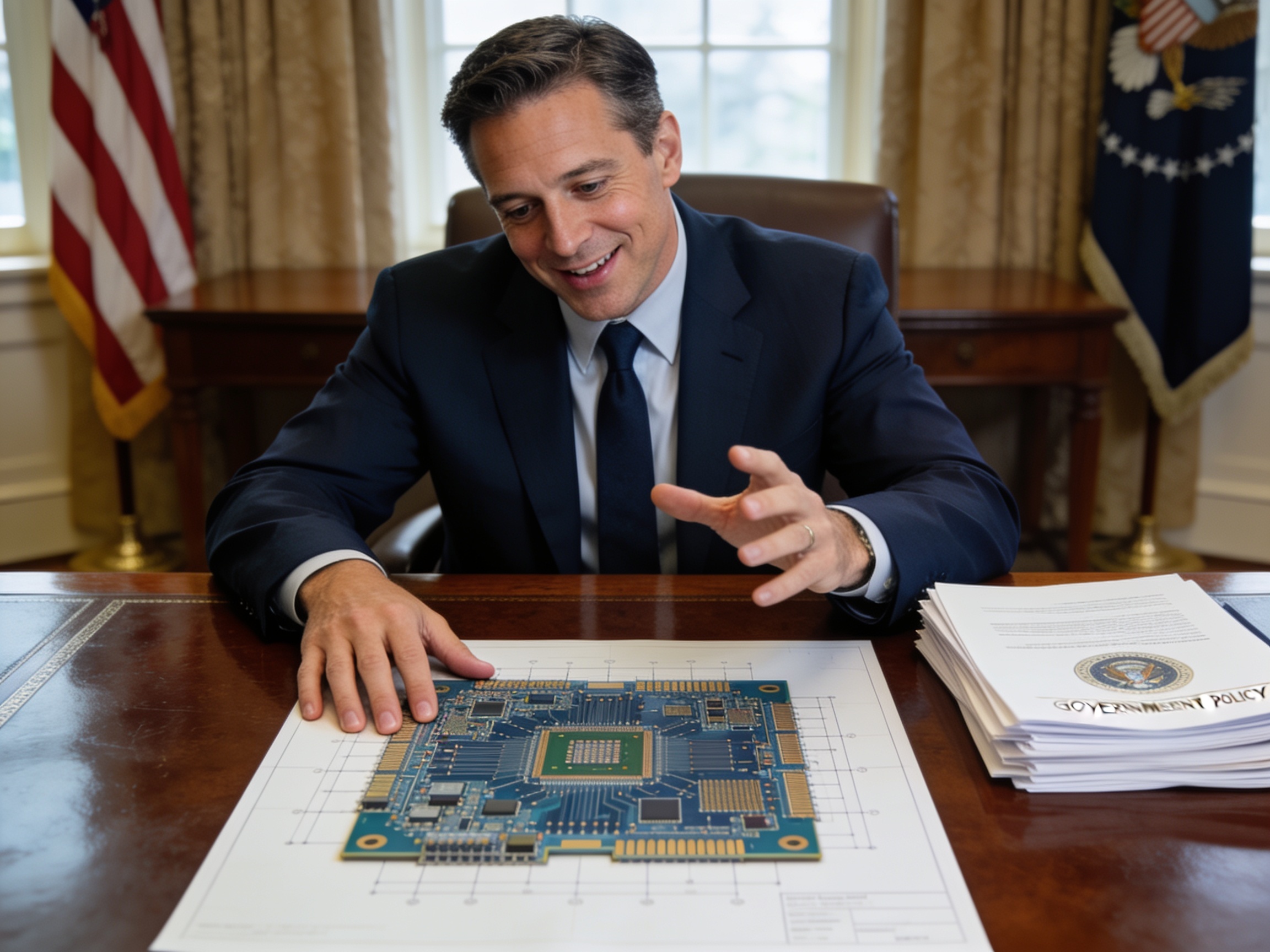
Policy makers in Washington are increasingly scrutinizing blueprints and trade flows to enforce global semiconductor export controls effectively.
IndependentReport, Washington – The October 2023 tightening of rules on advanced chip sales to China marks not just a trade adjustment, but a fundamental restructuring of the global economic security architecture. Our analysis of congressional testimony and trade data reveals that global semiconductor export controls have evolved from simple tariff tools into complex instruments of geopolitical statecraft, fundamentally altering how nations approach industrial policy.
For decades, the prevailing orthodoxy in international relations suggested that economic interdependence would reduce the likelihood of conflict. However, recent policy shifts in Washington and Brussels indicate a decisive move toward “de-risking” rather than seamless integration. This pivot is driven by the realization that advanced semiconductors are the foundation for artificial intelligence, modern warfare, and economic competitiveness.
The United States, leading this effort, has mobilized its allies through the G7 and bilateral channels to create a unified front. This coordination aims to prevent the transfer of critical technologies that could enhance military capabilities of rival nations. While officials publicly frame these measures as national security necessities, private sector intelligence reports suggest a broader intent to maintain Western technological hegemony for the next two decades.
The core of the new strategy relies on three distinct pillars that go beyond traditional trade sanctions. First, the updates to the Entity List effectively bar companies from transferring US-made technologies to specific blacklisted Chinese firms. Second, and more insidiously, is the expansion of the Foreign Direct Product Rule (FDPR).
This rule is a game-changer because it asserts extraterritorial jurisdiction. It restricts foreign-made items from being shipped to China if those items were produced using US-origin software or technology. Our review of compliance guidelines shows this effectively creates a chokepoint on global manufacturing, forcing foundries in Taiwan and South Korea to seek US approval before selling to certain Chinese clients.
Beyond hardware, the Commerce Department has proposed rules restricting US cloud computing providers from offering advanced AI training power to Chinese companies. This closes a significant loophole where Chinese firms could access cutting-edge capabilities without physically possessing the chips. Data from the Semiconductor Industry Association indicates this could impact up to 15% of revenue for major US cloud providers operating in the Asia-Pacific region.
Read More: The Evolution of China’s Semiconductor Industry under U.S. Export Controls
While the narrative suggests a united front, the reality of implementation is fraught with friction. Japan and the Netherlands, home to critical equipment manufacturers like ASML and Tokyo Electron, have introduced their own restrictions. However, our analysis of trade flows shows a lag time of 6 to 12 months between US announcements and full European adoption, creating a grey market window.
Domestic industries in allied nations are pushing back. The German Chamber of Commerce reported that 60% of its tech members fear retaliation from Beijing, which remains a crucial market for automotive and industrial chips. This tension highlights the delicate balance policymakers must strike between security alliances and economic prosperity.
Read More: The Shifting Semiconductor Supply Chain: How 2026 Export Controls Are Redrawing Global
While the stated goal of these controls is to delay rival technological advancement, evidence suggests a paradoxical outcome. Our investigation into Chinese venture capital investments reveals that funding for legacy chip production and semiconductor equipment manufacturing surged by 42% in 2023 following the initial US bans.
The US strategy attempts to keep a “small yard, high fence” around only the most cutting-edge technologies. However, the industry feedback loop indicates that the definition of “cutting-edge” shifts every 18 months. Consequently, China is aggressively investing in mature-node technologies (14nm and older) which control 70% of the global chip market by volume. This strategic pivot suggests that while the US may win the AI race, it risks ceding dominance in the broader automotive and industrial sectors.
Read More: US Export Controls Reshape Global Semiconductor Landscape: A Deep Dive into Market
Companies can no longer rely on historical trade patterns to forecast revenue. The volatility introduced by political decree requires a radical rethinking of supply chain logistics. Chief Technology Officers (CTOs) must now integrate geopolitical risk analysis into their product roadmaps, a task previously reserved for legal compliance teams.
Consider a mid-sized European manufacturer of industrial sensors. Under the old model, they sourced microcontrollers from Shenzhen to keep costs low. In the new reality, continuing this relationship risks violating export controls or facing secondary sanctions. A viable scenario involves diversifying suppliers to Vietnam and Malaysia, absorbing a 12% cost increase to ensure continuity of supply. This “China Plus One” strategy is no longer optional but a mandatory survival tactic.
The main objective is to restrict rival nations’ access to advanced computing power essential for military modernization and AI development, thereby maintaining a strategic technological advantage for the controlling nations.
While immediate effects are subtle, long-term impacts include increased prices for consumer electronics and potential delays in product launches as companies restructure their supply chains to comply with fragmented international regulations.
Complete bypassing is difficult due to the complexity of the supply chain, but grey markets and illicit transshipment routes are emerging. However, the lack of access to advanced lithography tools from companies like ASML remains a significant bottleneck for domestic production in targeted nations.
The era of treating technology solely as a commercial commodity is over. As global semiconductor export controls tighten, the industry must navigate a landscape where innovation is inextricably linked to diplomacy. Companies that fail to adapt to this political reality risk finding themselves on the wrong side of history.
IndependentReport - A secretive criminal case linked to a major geopolitical dispute has resurfaced, revealing that over 12 % of senior…
IndependentReport - The latest government policy shifts are igniting debates across continents, with analysts noting that 78% of citizens in…
IndependentReport - Global political observers note a surge in cross‑border tensions as the United Nations reports a 12% rise in…
IndependentReport - The United Nations General Assembly concluded with a historic 78% voter turnout, highlighting escalating tensions in the Indo‑Pacific…
IndependentReport - State-sponsored interference and transnational corruption are reshaping the landscape of international conflicts, with illicit financial flows estimated at…
IndependentReport - Global foreign direct investment plummeted 16% in 2023 according to UNCTAD, signaling a fractured landscape where global government…