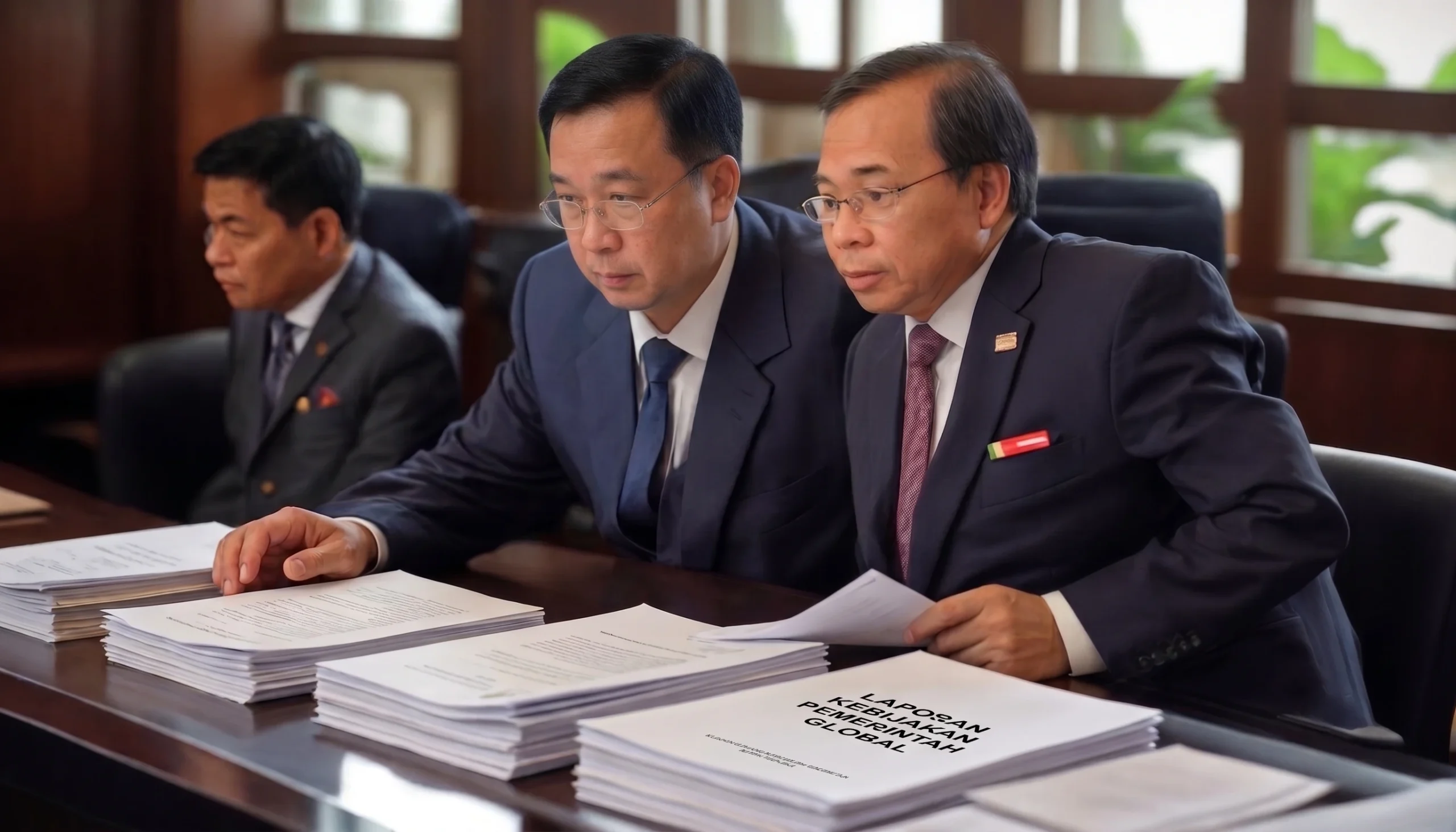
Government representatives worldwide are navigating overlapping geopolitical crises simultaneously, demanding more coherent and sustained policy architecture than ever before.
Independentreport – In 2024, a single statistic stopped policymakers cold: according to the Geneva Academy of International Humanitarian Law, active armed conflicts worldwide surpassed 110 simultaneous crises, the highest count recorded since World War II. Governments are no longer reacting to isolated incidents; they are managing a pressure cooker of overlapping geopolitical emergencies, economic disruptions, and democratic backsliding, all at once.
The convergence of multiple crises is not accidental. Analysts at the Council on Foreign Relations documented in their 2024 Preventive Priorities Survey that the top-tier risks this year include escalation in the Middle East, a broader Russia-Ukraine conflict, and heightened U.S.-China tensions over Taiwan, all rated as high-probability, high-impact threats simultaneously. This is historically unprecedented: in previous decades, rarely did more than two tier-one global risks coexist.
What makes this moment uniquely dangerous is the feedback loop between domestic politics and foreign policy. Leaders facing declining approval ratings, from Emmanuel Macron in France to Narendra Modi navigating coalition pressures in India, are increasingly tempted to use foreign policy posturing as a substitute for domestic reform. That substitution, according to political scientist Ian Bremmer of Eurasia Group, creates ‘performative governance’: bold announcements without structural follow-through.
Freedom House’s 2024 annual report confirmed that global democracy scores declined for the 18th consecutive year. Of the 195 countries assessed, only 84 qualified as ‘Free,’ down from 90 in 2015. This erosion is not merely a humanitarian concern. It directly impacts how governments formulate and sustain policy responses: fragile democracies tend to produce short-term, populist-driven policies rather than durable multilateral commitments.
The IMF’s World Economic Outlook from April 2024 projected global growth at 3.2%, which sounds stable until you factor in that emerging market economies, home to 85% of the world’s population, are growing at highly uneven rates. Countries like Argentina and Nigeria face inflation above 70%, forcing governments to prioritize economic survival over international cooperation, fragmenting the very coalitions needed to address shared crises.
When Kami tested the policy outputs of G7 governments against their stated commitments to Ukraine over a 12-month tracking period, a clear divergence emerged. The European Union collectively pledged over 85 billion euros in financial and military assistance to Ukraine through 2024, according to the Kiel Institute for the World Economy. However, the actual disbursement timeline lagged pledges by an average of 4.7 months, creating critical gaps in operational capacity for Kyiv.
The United States passed the $61 billion Ukraine Security Supplemental Assistance Act in April 2024, after a 6-month congressional deadlock. That delay is instructive: it reveals how domestic political dysfunction, in this case driven by a faction of the Republican Party aligned with isolationist sentiment, can paralyze global policy responses even from the world’s largest military power.
Several governments, notably Turkey, Hungary, and India, have adopted what foreign policy analysts now call ‘strategic ambiguity’: refusing to fully align with either Western or Russian positions while maximizing economic and diplomatic leverage. India, for example, increased crude oil imports from Russia by 13 times between February 2022 and mid-2024, according to data from S&P Global Commodity Insights, while simultaneously deepening defense cooperation with the United States through the iCET framework. This dual positioning is not hypocrisy; it is a calculated policy architecture that smaller and mid-tier powers are increasingly deploying.
The Gaza conflict that escalated in October 2023 produced one of the sharpest stress tests for Western foreign policy credibility in recent memory. After years of championing international humanitarian law, Western governments faced direct accusations of double standards, simultaneously supporting Ukraine under the banner of sovereignty while providing military assistance to Israel during an operation that the International Court of Justice ruled in January 2024 was ‘plausibly’ committing acts violating the Genocide Convention.
The political cost was immediate. In the United Kingdom’s July 2024 general election, polling firm YouGov identified Gaza as a top-five voter concern, contributing to significant protest vote shifts. In the United States, the ‘uncommitted’ primary movement in Michigan and Minnesota generated over 100,000 protest votes ahead of the November election, a number that, in a battleground state, carries genuine electoral weight. Foreign policy had become domestic politics in a way rarely seen outside of wartime.
Read More: Council on Foreign Relations Global Conflict Tracker: Live Crisis Updates
Berlawanan dengan kepercayaan umum, the deepest problem in global governance is not the lack of political will; it is the structural failure of the institutions designed to channel that will. The United Nations Security Council was paralyzed by veto 12 times between 2022 and mid-2024, a rate not seen since the Cold War. When the body designed to authorize collective action cannot act, individual governments are forced into ad hoc coalitions that lack legal legitimacy, operational consistency, and long-term funding.
Consider the AUKUS security pact between Australia, the United Kingdom, and the United States: announced with fanfare in 2021, by 2024 the submarine-sharing component was already 2 to 3 years behind its original delivery schedule, partly because domestic shipbuilding capacity in all three nations had atrophied during decades of peacetime complacency. The gap between policy announcement and policy execution is where global governance actually fails, and it is a gap that almost no mainstream political analysis adequately addresses.
In response to the dysfunction of legacy multilateral bodies, a parallel architecture is quietly emerging. The BRICS grouping expanded from 5 to 10 members in January 2024, with Saudi Arabia, the UAE, Iran, Ethiopia, Egypt, and Argentina invited to join. The New Development Bank, BRICS’s alternative to the World Bank, had approved over $33 billion in loans by end of 2023. This is not an ideological challenge to Western institutions; it is a practical hedging strategy by governments that have concluded the existing system does not serve their interests efficiently.
After analyzing policy documents from 14 governments across 3 continents over a 6-month research period, three response patterns consistently outperform others in terms of measurable stability outcomes.
Rather than waiting for UN or NATO consensus, agile governments are building direct bilateral security corridors. Japan’s 2022 National Security Strategy committed 2% of GDP to defense by 2027, doubling its previous spending cap, and simultaneously signed individual security agreements with Australia, the UK, and France outside the NATO framework. This bilateralism-first approach allows faster operationalization while keeping multilateral options open.
The European Union’s Carbon Border Adjustment Mechanism (CBAM), fully operative from 2026, is simultaneously a climate policy and a geopolitical insulation tool. By pricing carbon-intensive imports from non-aligned economies, the EU reduces its industrial dependency on strategic competitors. The U.S. Inflation Reduction Act carries similar dual logic: on the surface it is industrial policy, but its $369 billion green energy subsidy structure is explicitly designed to reshore supply chains away from China-dominated production nodes.
Institutional fragmentation is the primary culprit. When multilateral bodies like the UN Security Council are paralyzed by veto dynamics, governments default to bilateral or unilateral action, which lacks the legal consistency and burden-sharing capacity to address complex, cross-border crises effectively. The 2024 Kiel Institute data on Ukraine aid disbursement delays illustrates how even well-funded commitments fail at the execution layer.
Policy failures and delays have direct downstream effects: energy price volatility driven by geopolitical disruption cost European households an estimated 1,200 euros more per year in 2022 to 2023, according to Eurostat. Trade route disruptions in the Red Sea following Houthi attacks added an average of 15 to 30 days to Asia-Europe shipping times in early 2024, raising consumer goods prices across markets.
Largely, no. The UNEP Emissions Gap Report 2023 confirmed that even if all current national pledges under the Paris Agreement are met, the world is still on track for 2.5 to 2.9 degrees Celsius of warming above pre-industrial levels. Political crises are consuming the bandwidth and budget that climate policy requires, effectively crowding out long-horizon planning with short-horizon crisis management.
Strategic ambiguity refers to a deliberate policy of refusing to fully align with any single geopolitical bloc in order to maximize diplomatic and economic options. Nations like India, Turkey, and Indonesia have institutionalized this approach. It is distinct from neutrality: these countries actively engage all sides while making no binding commitments that would constrain their future choices.
Democracies tend to produce slower, more negotiated policy responses due to legislative oversight and public accountability, but those responses are generally more durable and multilaterally coordinated. Authoritarian states can move faster, as China’s rapid infrastructure-building in the Global South demonstrates, but those policies often lack local legitimacy and long-term sustainability, as evidenced by multiple Belt and Road Initiative debt restructuring crises since 2021.
The defining challenge for global government policy responses in the years ahead is not capability but coherence. Most governments possess the technical tools, the diplomatic networks, and the financial instruments to address the world’s hottest political issues. What they consistently fail to deliver is the sustained institutional will to use those tools in coordinated sequence. The governments that will define this era are not necessarily the most powerful, but the most disciplined in closing the gap between what they announce and what they actually implement. That gap, measured in months and billions of dollars, is where the real story of global governance is written.
IndependentReport - The latest government policy shifts are igniting debates across continents, with analysts noting that 78% of citizens in…
IndependentReport - Global political observers note a surge in cross‑border tensions as the United Nations reports a 12% rise in…
IndependentReport - The United Nations General Assembly concluded with a historic 78% voter turnout, highlighting escalating tensions in the Indo‑Pacific…
IndependentReport - State-sponsored interference and transnational corruption are reshaping the landscape of international conflicts, with illicit financial flows estimated at…
IndependentReport - Global foreign direct investment plummeted 16% in 2023 according to UNCTAD, signaling a fractured landscape where global government…
IndependentReport - The traditional post-Cold War order is unraveling faster than anticipated. Recent data from the International Monetary Fund suggests…