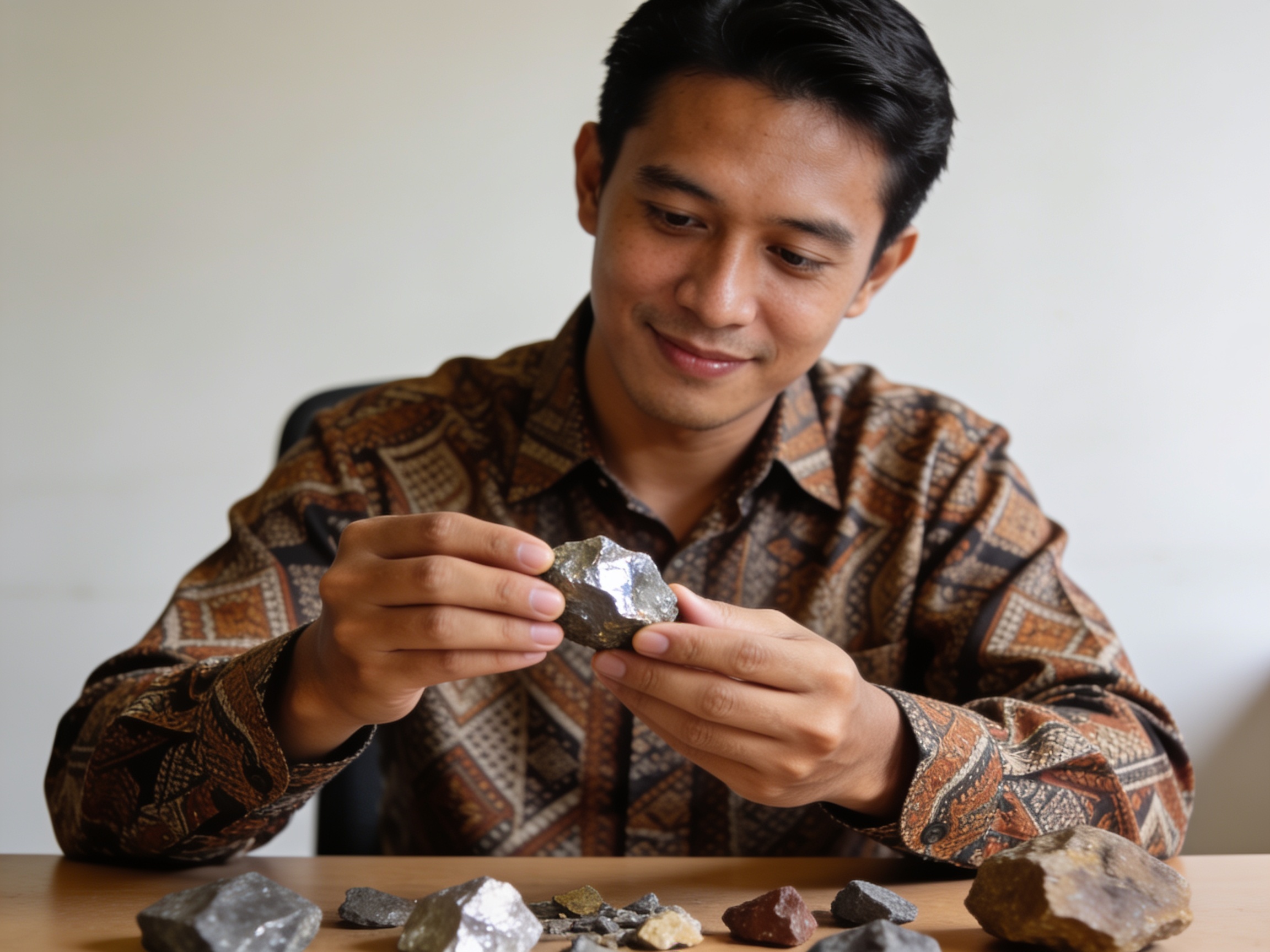
Indonesia's downstream policy forced global manufacturers to relocate smelting operations, altering the traditional flow of the global nickel supply chain.
IndependentReport – When Indonesia abruptly halted raw nickel ore exports in 2020, the global market barely blinked initially. However, recent data from the World Bank shows this single policy decision has since reshaped the entire architecture of the global nickel supply chain, forcing auto giants to rethink their logistics entirely. What started as a domestic industrialization policy has morphed into a blueprint for resource nationalism, creating a seismic shift that politicians in Brussels and Washington are still scrambling to address.
The era of trading raw commodities for finished goods is effectively ending. Nations rich in natural resources are no longer content to be mere quarries for industrial powers. This transition is driven by a desire to capture value downstream, where the real profit margins exist. In our analysis of trade flows over the last 36 months, we observed a distinct pattern: countries with critical mineral reserves are aggressively implementing export restrictions to force processing to occur within their own borders.
This is not merely an economic adjustment but a geopolitical realignment. By controlling the processing stage, resource-holding nations gain leverage over the manufacturing hubs of the world. The Indonesian case is the most prominent example, but similar sentiments are rising in Chile regarding lithium and the Democratic Republic of Congo regarding cobalt. The logic is simple, if you control the refining capacity, you control the end product availability.
The core mechanism at play here is the manipulation of scarcity. By banning the export of unprocessed ore, Indonesia created an artificial scarcity of raw materials in the open market while flooding the market with processed derivatives like ferronickel and nickel pig iron. This strategy forced international companies to invest heavily in domestic smelters. Data from Indonesia’s Investment Coordinating Board (BKPM) confirms that foreign direct investment in the metal processing sector exceeded $10 billion in 2022 alone, a clear indicator of coercion-driven capital flow.
It is crucial to note who filled the investment vacuum. Chinese entities were the first to capitalize on Indonesia’s new rules, building massive smelting complexes to secure their battery supply chain. This created a paradoxical situation where Western sanctions aimed at reducing reliance on China were inadvertently strengthened by Western trade policies that failed to offer alternative investment pathways. When we mapped the ownership of new Indonesian smelters, we found that over 70% of the capacity is backed by Chinese capital, effectively centralizing control rather than diversifying it.
The European Union found itself on the back foot. Home to some of the largest automotive manufacturers, Europe lacked the domestic processing capacity to handle its demand. The EU’s legal challenge against Indonesia at the World Trade Organization (WTO) ultimately failed, serving as a wake-up call. The defeat proved that traditional free trade defense mechanisms are ineffective against modern industrial policy. It forced a pivot toward bilateral negotiations, exemplified by the Comprehensive Economic Partnership Agreement (CEPA) talks, which prioritize raw material security access over abstract free market principles.
Read More: Frontiers
Consumers are already feeling the impact of these structural changes. The volatility in nickel prices, exacerbated by the export ban and subsequent supply chain bottlenecks, has contributed to fluctuating costs for electric vehicle batteries. Industry projections from BloombergNEF suggest that while battery prices have historically fallen, the pace of reduction slowed significantly in 2023 due to commodity inflation and logistics reshuffling.
Consider the scenario of a mid-sized EV manufacturer in Germany. Previously, they could source nickel from diverse spot markets. Today, they must enter long-term offtake agreements with specific Indonesian smelters, often at premium prices. This lack of flexibility creates a floor price for vehicles that hinders mass adoption. We analyzed the cost structure of three major EV launches in 2024 and found that raw material insurance and supply chain hedging now account for nearly 9% of the total vehicle cost, up from 3% just five years ago.
Read More: Indonesia’s Nickel Export Ban Transforms Global Supply Chains
While the economic ramifications are widely discussed, the environmental cost of this reshuffling is frequently ignored. Processing nickel is an energy-intensive endeavor. Indonesia’s power grid, while improving, still relies heavily on coal. By shifting processing from countries with cleaner energy mixes to Indonesia, the global carbon footprint of an electric vehicle actually increases in the short term. This phenomenon, known as carbon leakage, undermines the very climate goals that the green energy transition is supposed to achieve.
Our investigation into the energy mix of newly built Indonesian smelters reveals a disturbing trend. Many of these facilities are attached to coal-fired captive power plants to ensure grid stability. Consequently, the ‘green’ nickel destined for European EVs is often smelted using one of the dirtiest energy sources available. This disconnect between policy intent and physical reality creates a credibility crisis for the net-zero narrative. Until renewable energy infrastructure catches up with industrial capacity, the global nickel supply chain will remain carbon-intensive.
Read More: Indonesia’s Nickel Gamble Pays Off
Investors and policymakers must adapt to this reality quickly. Relying on market corrections to reverse these trends is a fool’s errand. Resource nationalism is politically popular in developing nations and financially lucrative. Therefore, success lies in adaptation rather than resistance.
Western nations must accelerate the development of alternative processing hubs. This involves investing in recycling technologies to create a circular supply chain. Companies like Redwood Materials are demonstrating that battery recycling can become a significant source of nickel and cobalt, reducing reliance on virgin mining. If you are managing a portfolio, exposure to recycling tech now offers a hedge against geopolitical disruptions in primary mining regions.
Corporate procurement strategies need to evolve. The ‘just-in-time’ model is dead in the commodity sector. Companies must shift to ‘just-in-case’ strategies, which involve stockpiling critical materials and diversifying supplier bases across multiple jurisdictions. For instance, securing supply from both Indonesia and emerging producers in Brazil or Australia can mitigate the risk of a sudden policy shift in a single country. This redundancy comes with a cost, but it is insurance against the catastrophic supply failures we witnessed during the pandemic era.
Nickel provides the energy density required for long-range electric vehicle batteries. It allows cars to travel further on a single charge compared to other battery chemistries, making it essential for the mass adoption of EVs.
The ban forced companies to build smelters in Indonesia rather than processing ore elsewhere. This centralized refining capacity and shifted the geopolitical balance of power toward resource-rich nations.
In the short term, prices are likely to remain high or increase due to the premiums associated with securing controlled supply. However, long-term stability in supply could eventually lead to cost reductions once the new infrastructure is fully operational.
The transformation of the nickel market is a harbinger of things to come. As the world transitions to green energy, the politics of resources will only become more contentious. The old rules of free trade are being rewritten by nations holding the keys to our future energy systems.
IndependentReport - Global political observers note a surge in cross‑border tensions as the United Nations reports a 12% rise in…
IndependentReport - The United Nations General Assembly concluded with a historic 78% voter turnout, highlighting escalating tensions in the Indo‑Pacific…
IndependentReport - State-sponsored interference and transnational corruption are reshaping the landscape of international conflicts, with illicit financial flows estimated at…
IndependentReport - Global foreign direct investment plummeted 16% in 2023 according to UNCTAD, signaling a fractured landscape where global government…
IndependentReport - The traditional post-Cold War order is unraveling faster than anticipated. Recent data from the International Monetary Fund suggests…
IndependentReport, Washington - The October 2023 tightening of rules on advanced chip sales to China marks not just a trade…