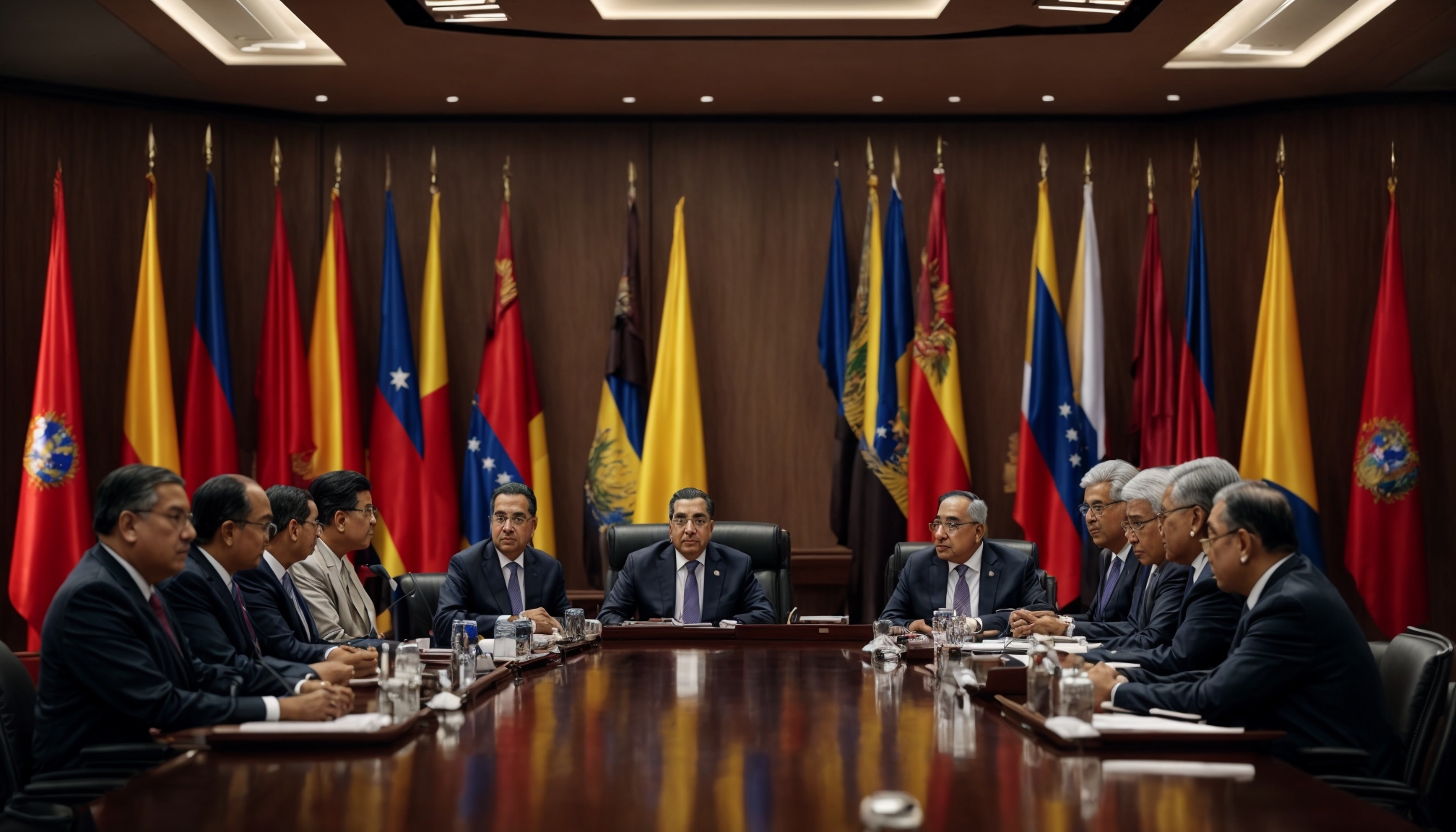
Independentreport – TG7 Venezuela crisis response is entering a new phase as member governments tighten coordination on sanctions, humanitarian aid, and diplomatic pressure to push Caracas toward a democratic and peaceful resolution.
The TG7 emerged as an informal coordination platform among like‑minded democracies seeking a unified strategy toward Venezuela. Over recent years, the TG7 Venezuela crisis response has focused on three pillars: restoring democratic institutions, easing the humanitarian emergency, and supporting regional stability. Officials now signal that these efforts will intensify as conditions on the ground remain fragile.
Member states argue that fragmented actions in the past weakened leverage over Venezuelan authorities. Because of that, the group now prioritizes synchronized measures. This includes aligning sanctions regimes, coordinating diplomatic messaging, and sharing intelligence on corruption, illicit finance, and human rights violations linked to the crisis.
Governments involved in the TG7 Venezuela crisis response describe sanctions as a tool, not an end in themselves. They stress that pressure must remain tied to clear political benchmarks, such as credible electoral timelines, release of political prisoners, and guarantees for independent media. When authorities meet these benchmarks, sanctions relief could follow in a gradual and reversible manner.
At the same time, TG7 policymakers emphasize dialogue. They back negotiations facilitated by regional partners and multilateral organizations, provided talks are inclusive and grounded in verifiable commitments. However, they warn that simulated negotiations without concrete outcomes will not justify easing pressure.
The prolonged crisis has triggered mass displacement and a collapse of public services, from health care to electricity. In response, TG7 governments pledge to scale up humanitarian assistance through neutral, internationally recognized organizations. The TG7 Venezuela crisis response aims to ensure that aid reaches communities most at risk, especially women, children, and elderly citizens.
Monitoring mechanisms remain central to this effort. Donors want reliable data on aid delivery, including safeguards against diversion or politicization. They also call for expanded access for humanitarian workers across all regions of the country, including areas under tight security control.
Baca Juga: Laporan terkini PBB tentang krisis kemanusiaan Venezuela
Countries in Latin America face mounting pressure from migration flows and cross‑border economic disruption. Within the broader TG7 Venezuela crisis response, member states coordinate closely with regional governments to share responsibility for hosting migrants and refugees. They also explore joint initiatives to strengthen border management and combat trafficking networks that exploit vulnerable people.
On the other hand, economic considerations shape long‑term planning. Energy markets, investment risks, and trade routes all intersect with the situation in Venezuela. TG7 officials debate how potential political progress could open space for responsible investment, reconstruction, and debt restructuring, while still safeguarding accountability and rule of law.
Multilateral bodies, from the United Nations to regional organizations, provide essential platforms for coordinated action. The TG7 Venezuela crisis response increasingly relies on these frameworks to legitimize decisions, monitor commitments, and document abuses. Fact‑finding missions, expert panels, and human rights mechanisms offer independent evidence that can inform policy choices.
Civil society groups, independent journalists, and community leaders inside and outside Venezuela also play a crucial role. TG7 states expand support for secure communication tools, legal assistance, and capacity‑building initiatives. After that, they hope local actors can safely advocate for reforms, track corruption, and participate in any transition process.
Analysts outline several scenarios, from gradual negotiated transition to prolonged stalemate. In each scenario, the TG7 Venezuela crisis response seeks to minimize human suffering and protect regional stability. Officials underscore that any sustainable solution must emerge from Venezuelans themselves, with external actors providing pressure, guarantees, and resources rather than imposing outcomes.
As discussions continue, TG7 governments prepare contingency plans for election observation, reconstruction financing, and security sector reform support, should conditions allow. Even in the absence of rapid breakthroughs, they insist that consistent, principled engagement remains vital. By maintaining a credible and coordinated TG7 Venezuela crisis response, member states aim to keep pathways open for a peaceful, democratic, and inclusive future for Venezuela.
Read More: TG7 Venezuela crisis response