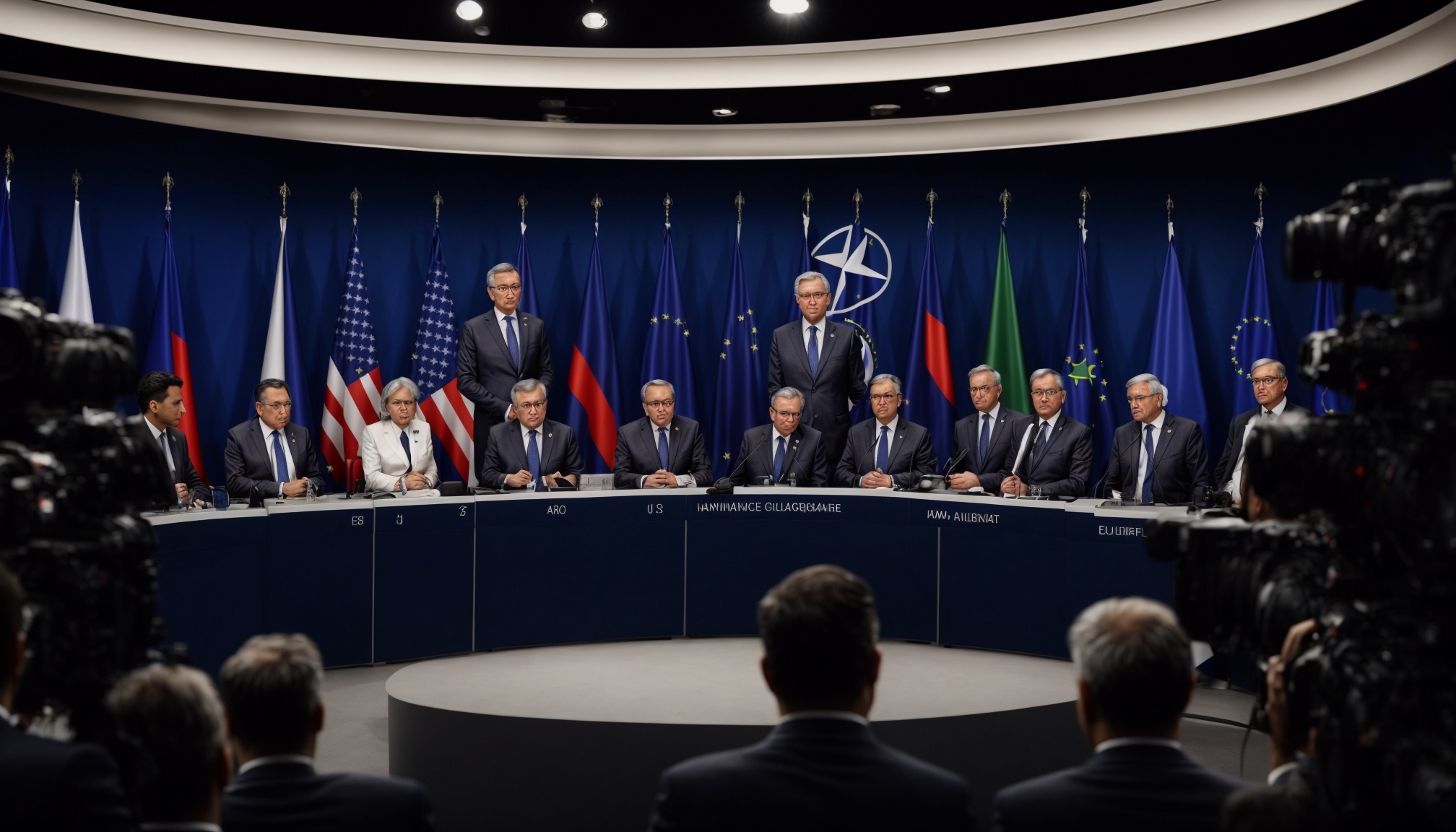
Independentreport – European leaders sharply criticized the latest Trump NATO comments reaction, warning that signals of conditional U.S. protection threaten the credibility of the alliance and could embolden rival powers.
Reactions from across Europe emerged within hours after Donald Trump suggested he might withhold U.S. defense commitments from NATO members not meeting spending targets. Several heads of government and foreign ministers described the remarks as “dangerous” and “irresponsible,” arguing that alliance solidarity cannot depend on shifting political rhetoric in Washington. They stressed that Article 5, the mutual defense clause, must remain unconditional to deter aggression.
Leaders from frontline states bordering Russia expressed particular concern. They argued that any hint of selective protection undermines deterrence and invites miscalculation by adversaries. The Trump NATO comments reaction also reverberated in Western capitals, where officials emphasized that NATO serves U.S. strategic interests as much as European security.
In Berlin, Paris, and other major capitals, government spokespeople moved quickly to reassure citizens that NATO’s core commitments remain intact. They underlined that the alliance decisions are collective and not determined by a single politician, even one who could again occupy the White House. As part of this broader Trump NATO comments reaction, several leaders reaffirmed that the U.S. Congress and the Pentagon have historically backed strong transatlantic ties.
Defense analysts noted that the statements arrive at a time of active conflict on Europe’s borders and heightened tensions with Moscow. Because of this, any suggestion that allies are “on their own” risks sending mixed signals to both partners and rivals. European officials insisted they will intensify diplomatic engagement with U.S. institutions beyond the executive branch to ensure continuity.
The controversy also reignited debate over Europe’s military spending and long-term capabilities. Many EU and NATO members have already increased defense budgets in response to Russia’s full-scale invasion of Ukraine, bringing several closer to or above the 2 percent of GDP guideline. However, the Trump NATO comments reaction pushed some leaders to argue that Europe must accelerate plans to boost industrial capacity, joint procurement, and interoperability.
Skeptics of overreliance on Washington spoke of “strategic responsibility” or “European pillar” concepts rather than full detachment from NATO. They argued that a stronger European role inside the alliance would both answer U.S. criticism and reduce vulnerability to domestic political swings in America. Baca Juga: NATO official overview of collective defence and Article 5 commitments
At the same time, policymakers warned against framing the Trump NATO comments reaction solely as a budget dispute. They said the issue touches on trust, predictability, and the perception of U.S. resolve in a crisis. That perception, they added, can determine whether a crisis happens at all.
Officials in Eastern Europe voiced fears that ambiguous signals from Washington will be closely watched in Moscow. Some warned that the Trump NATO comments reaction could be interpreted by the Kremlin as a sign of alliance division or fatigue, especially as the war in Ukraine continues. They argued that maintaining a united front remains essential for sustaining military aid and diplomatic pressure.
Beyond Europe, allies in Asia also followed the situation. Security experts said that if NATO appears weakened by internal political disputes, partners in the Indo-Pacific might question the reliability of U.S. security guarantees. The Trump NATO comments reaction therefore extends well beyond the transatlantic space and feeds into broader debates over the future of American leadership.
Looking ahead, European governments plan to use upcoming NATO meetings and bilateral visits to reiterate their commitment to defense spending and capability development. They also intend to convey privately that public remarks questioning Article 5 can have lasting consequences, regardless of whether they translate into policy. For many, the Trump NATO comments reaction has become an opportunity to press for institutional safeguards that protect the alliance from sudden political swings.
Diplomats suggested that deeper parliamentary and industrial cooperation between Europe and the U.S. could help anchor the relationship beyond electoral cycles. They emphasized that mutual security interests, shared technology, and economic ties continue to bind the partners together. However, they conceded that the Trump NATO comments reaction has accelerated conversations in Europe about resilience, redundancy, and the need to prepare for a more uncertain strategic environment.
In that context, some analysts proposed closer coordination inside the EU on defense planning, alongside enhanced roles for NATO’s commands in Europe. They argued that building stronger regional capabilities would reassure populations, signal seriousness to Washington, and reinforce deterrence. Ultimately, leaders across the continent agree that the Trump NATO comments reaction marks another turning point in how Europe thinks about its own security and its long-term relationship with the United States.