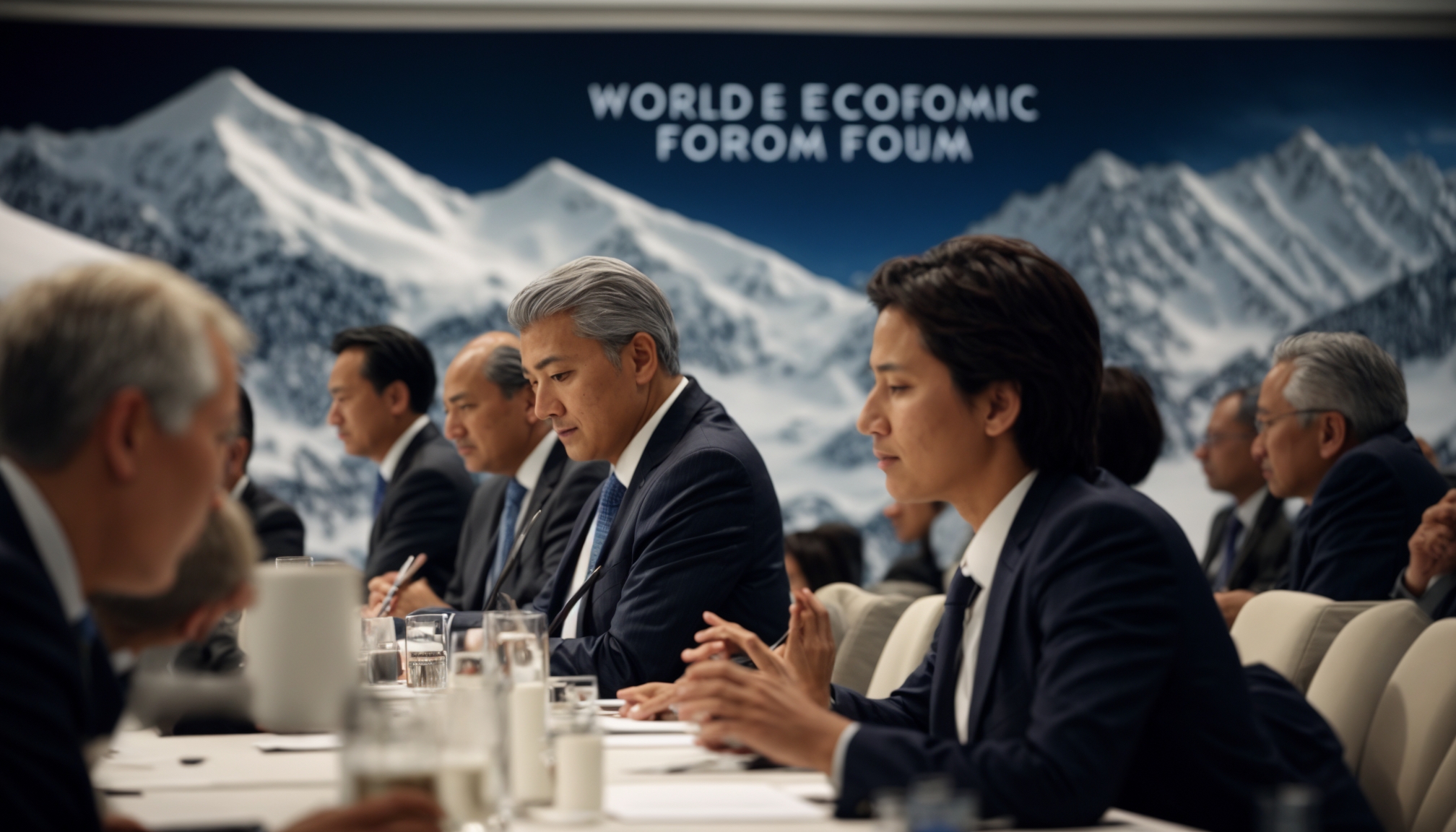
Independentreport – Davos diplomacy and multilateralism are under intense scrutiny as Donald Trump’s talk of a “Board of Peace” reopens debate over how much power the UN-centered order should still hold in global governance.
The annual World Economic Forum in Davos has long functioned as a symbolic stage for Davos diplomacy and multilateralism, where leaders defend open markets and cooperative institutions. Trump’s idea of a “Board of Peace,” floated in his trademark transactional style, signals frustration with slow UN processes and diffuse accountability. His rhetoric revives an older, sharper question: who really sets the rules of global order when crises escalate.
For decades, the United Nations anchored international security and development frameworks. Security Council resolutions, peacekeeping missions, and specialized agencies shaped responses from pandemics to nuclear proliferation. However, gridlock among major powers and rising geopolitical rivalry have weakened faith in this UN-centered order. Davos workshops and side meetings now mirror this tension between established institutions and emerging ad-hoc coalitions.
Trump’s proposition hints at a smaller, politically aligned group of states or figures, empowered to negotiate deals quickly and bypass lengthy UN processes. Supporters see this as a pragmatic upgrade; critics fear it would sideline universal norms and further fragment the rules-based system.
Trump’s “Board of Peace” concept remains vague, but its political logic is clear. It resonates with leaders who feel constrained by large multilateral forums and who prefer deal-making among a select group. In that sense, it clashes directly with Davos diplomacy and multilateralism as traditionally practiced, where inclusivity and consensus remain guiding principles.
In practical terms, such a board would likely resemble an informal security steering group, mixing major powers and regional players. It might attempt rapid mediation in conflicts, coordinate sanctions strategies, or broker ceasefires with fewer procedural hurdles than the UN Security Council. Yet the absence of clear legal authority raises serious questions about legitimacy and accountability.
On the other hand, some policymakers privately admit that smaller, flexible formats already operate in parallel to the UN. Contact groups, “P5+1” style formats, and regional coalitions often craft the real breakthroughs, while UN bodies later formalize the outcomes. A “Board of Peace” would simply codify what has long happened in practice, though with far more visible political branding.
The idea of Davos diplomacy and multilateralism colliding with an assertive, leader-driven “Board of Peace” highlights the UN’s fragile standing. The UN-centered order depends on moral authority, broad membership, and the perception that all states, large and small, have a seat at the table. Repeated failures to prevent atrocities, resolve protracted conflicts, or manage climate risk have eroded this perception.
Meanwhile, populist and nationalist movements challenge the very premise of pooling sovereignty through global institutions. These currents helped power Trump’s rise and still shape his foreign policy instincts. From this vantage point, an exclusive peace board seems attractive: fewer voices, clearer accountability, and faster decisions, in theory at least.
However, critics warn that such a shift would formalize a tiered system of security, in which major powers cut deals over the heads of smaller states. They argue that once Davos diplomacy and multilateralism give way to a tight inner circle, the incentive to maintain shared norms weakens. Conflicts in less strategic regions could receive even less attention, deepening perceptions of double standards.
Read More: United Nations overview of current global governance challenges
Davos offers more than panels and speeches; it serves as a dense network of private consultations among heads of state, CEOs, and civil society leaders. Within these circles, competing visions of security governance now collide. Advocates of Davos diplomacy and multilateralism emphasize that global risks, from climate to cyber threats, cannot be managed by ad-hoc “clubs” alone. They argue that even flawed institutions like the UN remain irreplaceable platforms for legitimacy.
Trump’s allies counter that institutional inertia carries its own dangers. They point to stalled Security Council reforms, uneven burden-sharing in peacekeeping, and the slow pace of sanctions enforcement. The “Board of Peace” becomes a shorthand for a more muscular, leader-centric model, where like-minded governments move first and worry about formal mandates later.
Business leaders in Davos occupy an ambivalent position. On one side, they depend on stable rules and predictable dispute resolution, both linked to multilateralism. On the other, many favor streamlined decision-making that can de-escalate conflicts quickly and protect supply chains. The friction between these impulses helps explain why Trump’s idea, while controversial, continues to attract serious discussion rather than outright dismissal.
Looking ahead, most analysts expect hybrid outcomes rather than a total replacement of Davos diplomacy and multilateralism. The UN is unlikely to disappear, but it may coexist with stronger issue-specific coalitions and informal peace forums. A “Board of Peace” could emerge as one such mechanism, perhaps framed as a high-level contact group endorsed, but not fully controlled, by the UN.
Such a compromise might preserve the symbolic centrality of the UN while acknowledging the political reality of power concentration. It would also create new questions: who qualifies for a seat, what criteria govern membership, and how to prevent abuse of influence. Without transparent rules, any board risks becoming another arena for geopolitical rivalry rather than a neutral broker.
Ultimately, the real test for Davos diplomacy and multilateralism will lie in outcomes rather than slogans. If existing institutions adapt and deliver credible progress on conflicts, climate, and inequality, demands for parallel peace structures may fade. If not, the attraction of exclusive, leader-driven bodies like Trump’s envisioned “Board of Peace” will grow, reshaping expectations of how global peace is negotiated.
In this contested landscape, Davos diplomacy and multilateralism stand at a pivotal juncture, caught between defending universal rules and accommodating the political logic of smaller, faster coalitions that promise peace but may also harden divisions in the international order.